
What is DeepSeek?
DeepSeek is a leading company in the field of open-source artificial intelligence. Unlike many AI companies that keep their technology private, Deep Seek V3 believes in transparency and collaboration. They openly share their advanced language models with the public.

This commitment to open source makes DeepSeek a key player in making powerful AI technology available to a wider audience. This also helps to create a more dynamic and innovative environment within the AI field.
It’s available for free on deepseek.com, you can create a new account or – for quick login – use a Google account directly.

DeepSeek primarily focuses on developing and releasing powerful language models that can be freely used by researchers, developers, and the broader AI community.
By making these models publicly available, Deep Seek V3 aims to speed up AI research, encourage the development of new applications, and empower individuals and organizations to utilize the transformative potential of AI The open-source approach adopted by DeepSeek fosters a collaborative environment where researchers can build upon each other’s work, share knowledge, and collectively advance the field of AI.
This collaborative spirit not only accelerates progress but also ensures that the benefits of AI are more widely available and distributed fairly.
“Read More: Top 10 AI Tools for Business Efficiency in 2025“
Features
Intro
The DeepSeek model is characterized by its high capacity for data processing, as it possesses a vast number of variables or parameters. In artificial intelligence, the concept of a variable is linked to the diversity of skills and capabilities that a model possesses, enabling it to handle massive amounts of data.
These variables can be likened to the arms that allow the model to perform various tasks. Deep Seek V3 has surpassed Meta’s largest open-source model by 1.6%, with the number of parameters reaching 685 billion. Unlike other companies such as OpenAI and other AI companies, DeepSeek adheres to the open-source principle, which means sharing its code with everyone to facilitate development and contributions.
However, this model cannot be considered entirely a community-driven project as it receives significant support from DeepSeek itself. Therefore, comparing it directly to other open-source projects may not be entirely accurate.
Top Features
The following are the key features of DeepSeek:
- Open-source: DeepSeek is a pioneer in the field of open-source AI, committed to making advanced AI models accessible to the public. By sharing its models and research, this model fosters collaboration, accelerates innovation, and democratizes access to powerful AI tools.
- Reasoning Focus: DeepSeek specializes in developing AI models with exceptional reasoning capabilities. These models excel at tasks that require logical thinking, such as mathematical problem-solving, code generation, and understanding complex instructions.
- Explainability: Those models are designed to be transparent and explainable. This means that users can understand how the model arrived at its conclusions, which is crucial for building trust and ensuring ethical AI practices.
- High Performance: DeepSeek models have consistently demonstrated impressive performance on various benchmarks, often rivaling or surpassing proprietary models from leading AI companies. This highlights the effectiveness of Deep Seek’s open-source approach and the quality of its research.
- Versatility: DeepSeek models are versatile and can be applied to a wide range of tasks, including natural language processing, content generation, and decision-making. This versatility makes Deep Seek V3 models valuable tools for businesses, researchers, and individuals alike.
- Continuous Innovation: DeepSeek is dedicated to pushing the boundaries of AI research and development.
The company actively works on improving its models, exploring new techniques, and addressing emerging challenges in the field of AI.
“Read About: Using Generative AI-Powered Tools to Analyze Data“
DeepSeek vs. ChatGPT
DeepSeek V3 and ChatGPT represent different approaches to developing and deploying large language models (LLMs). Here’s a breakdown of their key differences:
- Architecture and Training:
- Deep Seek: Utilizes a Mixture-of-Experts (MoE) architecture, a more efficient approach compared to the dense models used by ChatGPT. MoE activates only a subset of experts for each input, reducing computational costs. DeepSeek V3 was trained with FP8 precision, significantly reducing memory usage and enabling training on a massive dataset of 14.8T tokens.
- ChatGPT: Employs a dense transformer architecture, which requires significantly more computational resources.
- Cost:
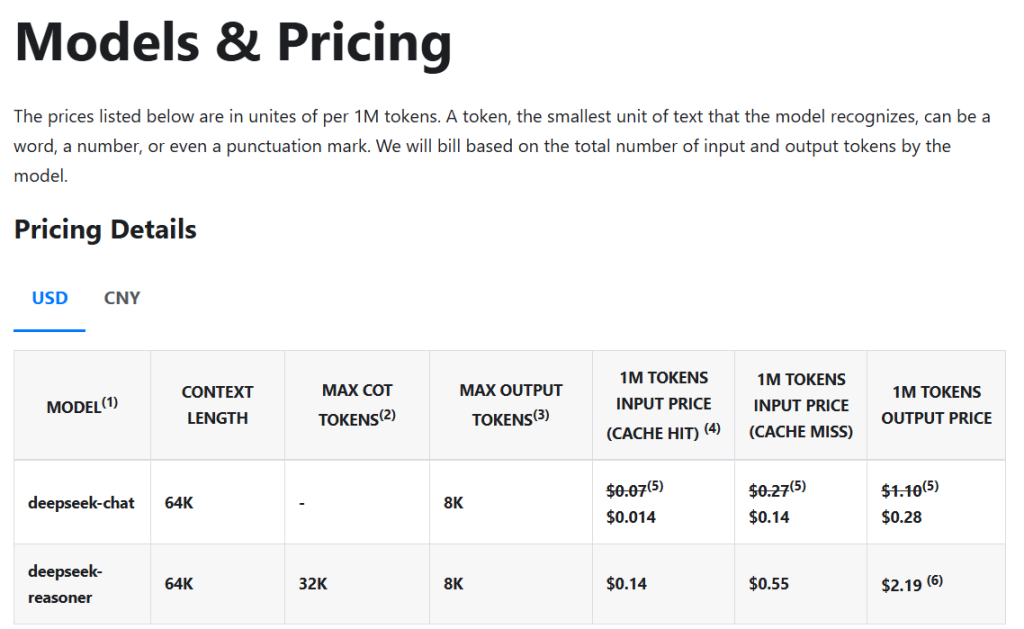
- Deep Seek V3: Demonstrates significantly lower training costs ($5.5M) compared to ChatGPT ($100M+). This cost-effectiveness extends to API pricing, with DeepSeek V3 offering significantly lower costs per token compared to models like Claude 3.5.
- Performance:
- DeepSeek V3: While both models excel in various tasks, DeepSeek V3 appears to have a strong edge in coding and mathematical reasoning.
- ChatGPT: Generally considered stronger in conversational fluency and generating human-like text.
- Open-Source vs. Closed-Source:
- DeepSeek V3: This is an open-source model, allowing for greater transparency, community involvement, and potential for innovation through collaborative development.
- ChatGPT: This is a closed-source model, limiting access and control for researchers and developers.
- The “AI Data Pollution” Crisis: The DeepSeek V3 incident, where it was mistakenly identified as ChatGPT, highlights the growing concern of “AI data pollution.” As AI-generated text becomes increasingly prevalent, training data for new models can become contaminated, potentially leading to biased or inaccurate outputs.
“Read Also: What Are The Uses of AI In Social Engineering Attacks?“
How Deep Seek V3 Will Be a Game Changer?
What truly excites me about DeepSeek V3 is its incredible efficiency. We’ve all heard how running powerful AI models often demands supercomputers or expensive hardware, making it nearly impossible for most people to experiment with the latest technology.
But DeepSeek-V3 is designed to work smoothly on everyday computers. This means you can explore, build, and launch AI projects without needing a massive, industrial-scale setup. Whether you’re an aspiring AI developer working on personal projects or a startup testing your ideas, this accessibility is a game-changer. One of the biggest frustrations I’ve faced in AI development is the lack of transparency.
Many powerful AI models are proprietary, meaning their inner workings are hidden. We’re left relying on their outputs without knowing how they arrived at those results. It’s like using a magic box – you see the results, but you don’t understand the magic behind them. DeepSeek-V3 completely changes this. It embraces radical transparency, allowing anyone to look under the hood and truly understand how the model works. This open approach fosters learning, and trust, and encourages responsible development.
Conclusion
DeepSeek V3 and ChatGPT offer distinct approaches to large language models. DeepSeek V3, with its open-source nature, efficiency, and strong performance in specific domains, provides a compelling alternative to closed-source models like ChatGPT.
While ChatGPT may excel in conversational fluency, the competitive landscape and the “AI data pollution” crisis highlight the importance of robust development practices and ethical considerations in the future of AI.
